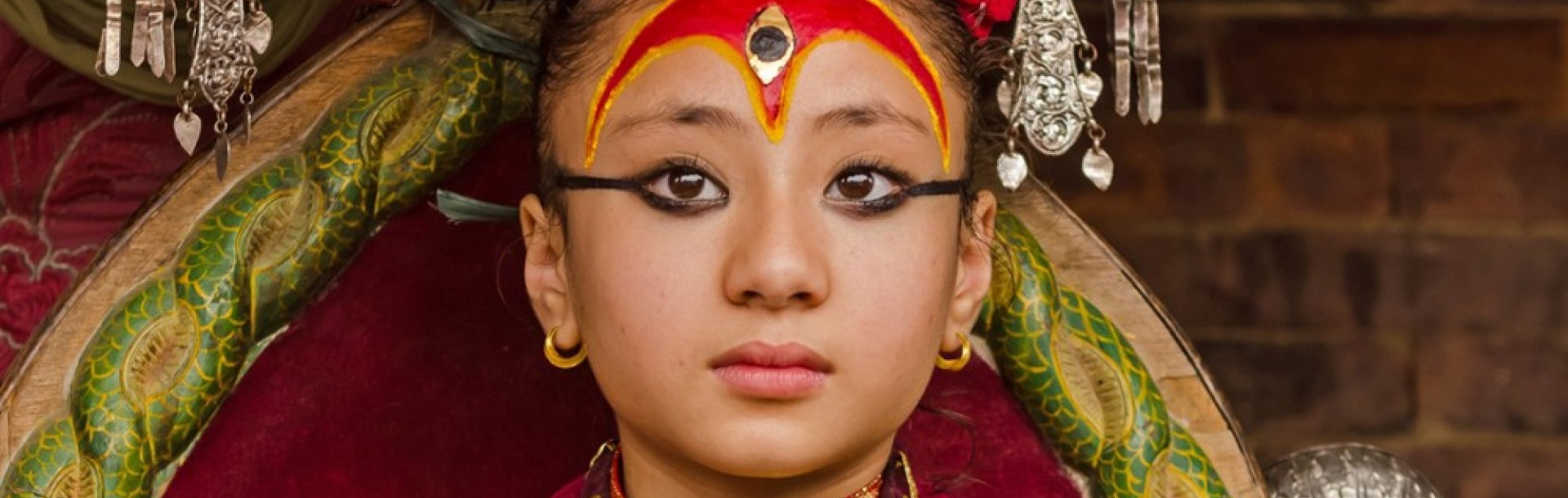
Living Goddess Kumari
✅ Living Goddess Kumari
The Living Goddess Kumari is selected from the Shakya or Bajracharya clan of Kathmandu's Newari community. Kumari Devi is a pre-pubescent girl believed to be the reincarnation of the Hindu goddess Durga—popular as Taleju in Nepal. Historically, several Kumaris existed throughout the Kathmandu Valley. The most important Kumari resides in Kathmandu in a royal dwelling called the Kumari Bahal. Almost every town in the valley, including Bhaktapur and Patan, had its own Kumari during medieval times, with a unique "royal" Kumari worshipped by the former Hindu kings. While many traditions have faded, the Kumari tradition still continues with great reverence.
✅ Selection Process
The Kumari selection is an elaborate ritual involving five senior Buddhist Bajracharya priests, known as the Panch Buddha, the BadaGuruju or Chief Royal Priest, Achajau (priest of Taleju), and the royal astrologer. The chosen Kumari must meet strict physical and spiritual criteria, symbolizing purity and divine embodiment. Once selected, the Kumari lives in Kumari Bahal in Basantapur, separated from her family and relatives, embodying her divine role.
✅ Life of the Kumari
The Kumari always wears red attire and has her forehead painted red, symbolizing power and divinity. She sits on a throne with her attendants and performs public appearances only during special ceremonies and festivals. The Kumari's life is secluded, and her movements are limited to protect her sanctity. Usually, she serves as the Living Goddess until she reaches menarche (first menstruation), generally before age 16, after which a new Kumari is selected.
✅ Kumari Puja: Worship and Cultural Significance
Kumari Puja is a ritual emphasizing the belief that divinity exists within every human, particularly females. It is believed that even a glimpse of the Kumari bestows good fortune and blessings. Devotees gather eagerly in Kumari Chowk, the courtyard of her palace, hoping to catch a brief sight of her. These rare appearances create an atmosphere filled with devotion and spiritual energy.
✅ Myths and Misconceptions
A popular superstition warns that any man who marries a Kumari will die by coughing blood within six months. However, this myth does not hold true in reality; many former Kumaris have married and lived healthy, happy lives. This belief likely stems from the sacredness and mystique surrounding the Kumari tradition.
✅ Role in Festivals and Society
The Kumari plays a central role in many Nepalese festivals such as Indra Jatra, where she is paraded through the streets on a chariot, blessing the people and the city. Her presence symbolizes the living connection between the divine and the people, maintaining a unique cultural heritage that blends Hindu and Buddhist practices.
✅ Modern Perspectives and Challenges
While the Kumari tradition continues to fascinate locals and tourists alike, it also faces modern challenges. Critics question the impact of seclusion on the child’s psychological well-being, and debates about the practice’s place in contemporary society are ongoing. Nonetheless, the tradition remains a vital part of Nepal’s intangible cultural heritage and religious identity.
✅ Visiting the Kumari Bahal
Tourists can visit Kumari Bahal in Basantapur, Kathmandu Durbar Square, though the Kumari herself appears only during specific rituals. Visitors can witness the ancient architecture and vibrant ceremonies surrounding the Living Goddess, gaining insight into Nepal’s rich cultural and religious history.
Photo: Living Goddess Kumari Image | Duke Nepal